
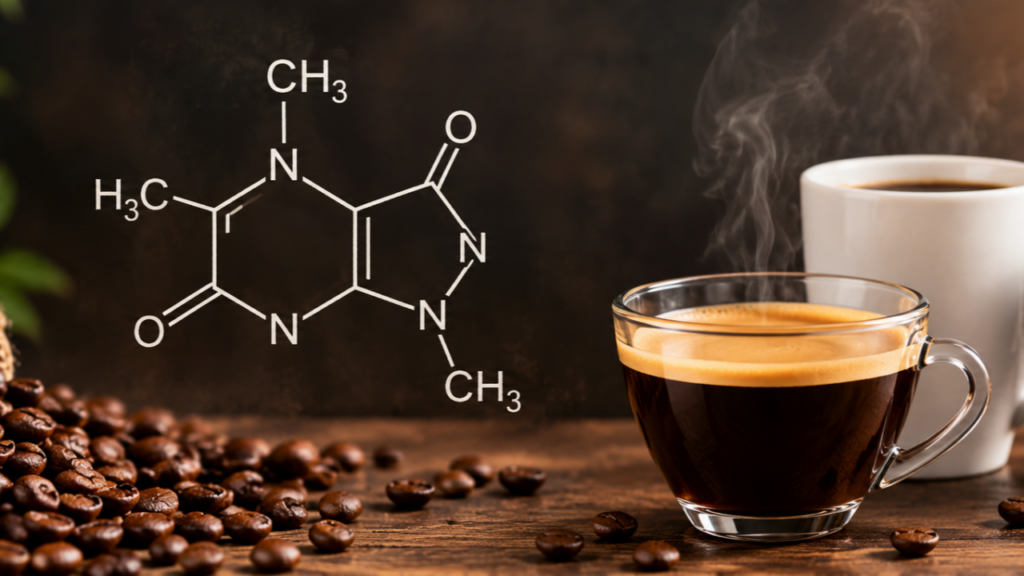
Why “Just Cut Out Coffee” Is Guesswork Dressed Up As Guidance
Stan sat down for his session and told me he’d stopped drinking coffee entirely.
Not because he wanted to. Because his personal trainer told him caffeine was spiking his cortisol, and his cortisol was already high enough in the morning without help.
He’d been off coffee for three weeks and he felt terrible.
This isn’t a Stan problem. It’s everywhere.
I hear a version of this at almost every networking event I go to. Someone finds out what I do, then tells me about the “caffeine commandment” their trainer, yoga instructor, or health coach just handed them. Delay your coffee until mid-morning or cut it out completely. Cortisol is highest right when you wake up, so don’t add fuel to that fire.
None of these people have seen a lab result. None of them have access to blood work. They’re repeating “a rule” they picked up somewhere, and passing it along with total confidence.
The biology they’re referencing is real. The advice built on top of it is lazy.
Cortisol does spike shortly after you wake up. That’s not a malfunction, it’s your body switching itself on for the day. It drops through the morning, then rises again later, sometimes in the afternoon, sometimes in the evening, depending on the person.
Caffeine can raise cortisol further. Also true.
Here’s what gets left out every time this advice gets repeated: how your body handles caffeine in the first place is largely genetic.
Fast metabolizer or Slow metabolizer. Same coffee, different outcome.
Some people clear caffeine quickly. They get a clean bump in alertness and it’s out of their system before it has much chance to keep cortisol elevated.
Others clear it slowly. Caffeine lingers longer, and that extended presence keeps cortisol elevated well past when a fast metabolizer’s would have settled back down.
Stan’s testing showed he’s a slow metabolizer. Which means his personal trainer’s advice wasn’t wrong because it was dumb. It was wrong because it was generic advice, never tested against Stan’s actual biology. But the fix wasn’t just “time your coffee better.” His genetics flagged other markers too, ones that pointed to a nervous system more sensitive to stimulants than most. So we kept him off coffee, but not for the reason his trainer thought, and we replaced it with something that gave him energy without the same load on his system.
I’m a slow metabolizer myself. That’s exactly why I stick to one coffee before 9am and wait an hour after I wake up before I touch it. Not because I saw it on a 30 second reel from a guy selling supplements. Because I tested it and built my own foundation around how my body processes caffeine, not what caffeine does in general.
Confidence isn’t the same thing as expertise.
Anyone telling you to change your caffeine intake without ever seeing your genetics or your cortisol pattern isn’t giving you a strategy. They’re giving you their best guess, delivered with enough conviction that it sounds like fact.
Caffeine isn’t the only place this shows up. I see the same pattern with intermittent fasting. Someone gets told to fast for 16 hours because it worked for their friend, with nobody checking how that person’s blood sugar responds to going that long without food. For some people it’s a great tool. For others, it just spikes their stress hormones and tanks their energy by 11am. Same story, different input.
If you’re running a company, you’d never make a resourcing decision off a hunch from someone who hasn’t looked at your numbers. You’d ask for the data first.
Your body deserves the same standard.
Before you cut anything else out, ask this instead
Where did this advice come from, and what data was it based on?
That one question separates people who are optimizing from people who are guessing and calling it a routine.
If you want to know how you metabolize caffeine, and what your real cortisol pattern looks like across the day, that’s exactly what we map before we change anything. And caffeine is just one input. The same blind guessing happens with fasting, supplements, training intensity, sleep aids, peptides or whatever the current advice trend is. If you’re making changes to your health without knowing your own data, caffeine is probably the smallest thing you’re getting wrong.
Message me and I’ll walk you through what we can test, and what it would tell us about your health.
Cheers,
Deepak