Your health doesn’t collapse overnight. It drifts.
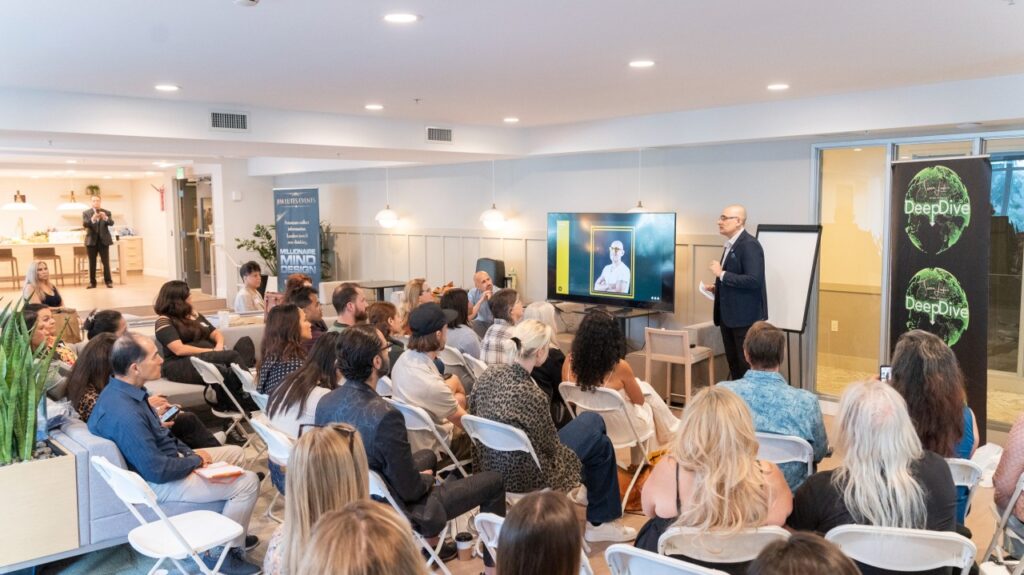
I was recently speaking at the Deep Dive event in San Diego. I was the second speaker of the day and by the time of the lunch break, I was fixated on only two things. Get to the bathroom ASAP and grab lunch as I was starving. As I came out of the bathroom, fixated on eating just about anything at that point, I was ambushed and surrounded by three men who had known each other for decades. They wanted to talk to me about what I shared on stage during my talk.
Within five minutes, I forgot that I was hungry.
Because I realized I was looking at a real-time science experiment.
Even though my stomach was grumbling, we had an insightful conversation over the next 15 mins.
These three men had been friends for over 40 years, and were all turning 60 this year. They were the same age and had the same four decades to make decisions about their bodies. And three completely different outcomes standing right in front of me.
As someone who has built my entire methodology around testing and data, this was the jackpot. A controlled study walking around in human form.
My talk resonated with all of them in different ways. I almost missed lunch spending the next 15 minutes with them, and got more time at the VIP afterparty that evening at the host’s penthouse overlooking the city. I wasn’t just having conversations, I was witnessing forty years of decisions played out in front of me.
I was able to witness three completely different versions of what 60 looks and feels like.
Jack
I noticed these things right away.
He was lean, moves well, and stands without effort. He sat down and got back up without thinking about it. No groaning, no bracing on the chair, no readjusting his back to find a comfortable angle.
He told me he’s trained for years, strength training a couple times a week, frequent yoga classes and pilates when he can fit it in. Nothing extreme, just being consistent with it all.
He’s still working as a senior leader and told me he treats his training as non-negotiable.
He didn’t look like he’s trying to hold things together. He looks like things are working for him.
I have 10 years to go, but I plan to stay mobile and agile like him at sixty. After resolving my back injury and rebuilding from the ground up, I look and feel better than most of my peers. Jack wasn’t a fantasy. He’s the result of decades of decisions stacking in the right direction.
Now the second guy. This is where it gets interesting.
John
This is the one most of you need to pay attention to.
He worked a physical job his whole life. So in his mind he did the work by staying active. He didn’t sit at a desk, he earned his wear and tear.
But standing next to Jack, the gap was obvious.
He wasn’t overweight. But he wasn’t healthy either.
His energy was low, you could feel it in how he carried himself. He told me his joints ache constantly. He asked me for tips on the gut issues he’s been ignoring. And his doctor is already talking about blood pressure medication and statins.
John spent 30 years running his own contracting business. Always on his feet, always physical. He told me he never understood why guys needed gyms
I could tell he was confused by it all, because he thought he’d done more than most.
Just not what mattered.
Here’s where this may hit home for you: While you’re not him and you don’t have a physical job. Many of you are running this exact playbook in a different way.
You’re hitting the gym, staying active, and feeling good about being more active than 90% of your peers.
But your doctor is still talking to you about blood pressure medication. Or your cholesterol numbers. Or that pre-diabetic warning that came back on your last bloodwork.
And you can’t figure out why.
Because you’re doing more than most. So why isn’t it working?
Here’s what John didn’t understand, and what most of my readers don’t either: more isn’t the answer. Smarter is.
I’m not here to add another protocol to your calendar. I’m here to save you from your doctor’s prescription pad.
Intelligent health management looks like this: identifying the one or two leverage points that address the root cause, instead of stacking ten interventions that manage symptoms.
The third guy is what happens when the drift goes unchecked.
Ted
This is where it all catches up.
He was overweight and had already one back surgery – an L5-S1 fusion. He was looking at another.
He walked with a limp. Standing up required bracing himself on the table, and sitting down looked the same way. There was constant low-level pain that never fully resolved.
Everything for him was harder than it should be. Work drained him. He’d stopped chasing his grandkids around, started skipping things he used to enjoy, and his body wouldn’t cooperate with the life he wanted to live.
Ted told me he was always going to ‘get to’ his health when his practice slowed down. The slowdown never came, until the back surgeries did.
I recognized it instantly because I was him.
That was almost me when I injured my back.
Every movement was calculated. Every day was about managing pain instead of building a life.
The difference between Ted and me? I caught it earlier and rebuilt. He let it compound until structural damage became surgical reality.
Same Age. Different Realities.
Three friends with four decades of choices behind them, and three completely different outcomes.
These men aren’t outliers. They’re the predictable result of of how each of them treated their body over those decades.
And here’s what matters: none of this happened suddenly.
You can draw a straight line back 20 or 30 years and see exactly how each of them got here.
Jack had stacked enough good decisions that his body still worked for him at 60. He invested early and let the compounding work in his favor.
John relied on “good enough” and is now paying for the gaps. He confused activity with health. Movement with optimization. Effort with strategy.
Ted let too many things slide. And when something finally broke, there was no buffer left to absorb it.
Health Doesn’t Collapse. It Drifts.
This is the part most men get wrong.
Health doesn’t collapse overnight. It drifts. Quietly, gradually, and predictably.
Until one day you realize you’re not operating at the level you used to, and you can’t explain why.
Your 30s let you get away with it. Your 40s start asking questions. Your 50s start collecting the bill. At 60, you’re not guessing anymore. You’re living the result.
You wouldn’t run a business this way. You wouldn’t watch revenue drift down quarter after quarter, ignore the leading indicators, and only act when the company is in crisis.
You’d run the numbers. You’d identify the trend early. You’d intervene while you still had options.
But with your body? You’re hoping the trend reverses on its own. Hoping your gym routine is enough. Hoping the symptoms you’re explaining away as “just aging” aren’t consequences compounding.
You Already Know Which Direction You’re Trending
If you’re being honest, you don’t need another article to tell you which of these three men you’re becoming.
You can feel it.
In your energy. In your recovery. In the promises you make to yourself and don’t keep.
You feel it when you wake up tired despite “enough” sleep. When your knees “snap, crackle and pop” on the stairs. When you can’t remember the last time you felt genuinely strong, not just functional.
It’s not too late to change it. But it does get harder.
Because now you’re not building forward. You’re trying to undo years of damage that’s been compounding for years.
Or you decide to address it now, while it’s still fixable instead of structural.
You Won’t Arrive At 60 By Accident
You’ll arrive there exactly how you’ve been training yourself to live.
Jack didn’t get lucky and Ted didn’t get unlucky. They both got exactly what their decisions earned them over 40 years.
The only question is which version you’re earning right now.
Here’s the good news for Ted. He’s decided to work with me. He’s about to get insights into his body that his doctor was never going to give him. Not because his doctor isn’t competent, but because the medical system isn’t built to find root causes, it’s built to manage symptoms after they show up.
If you’re the kind of man who can handle that level of honesty and do something about it, book a Vitality Check Up call. https://calendly.com/info-20912/vitality-check-up
If you’re still telling yourself you’ve got time, this isn’t for you.
You don’t need someone to make you feel better about where you are. You need someone who’ll help you avoid becoming like Ted.
Cheers,
Deepak