
(Why healing myself wasn’t enough—and what it took to become the father they deserve)
In Part 1, I told you about rebuilding my body. About going from a man who couldn’t pick up his 10-pound baby to someone who was strong, healthy, and present again.
But if I’m honest, the physical part wasn’t the hardest.
The harder truth was this: I carried emotions with me. Deep, unresolved emotions from my own upbringing. I would lose my temper over little things. I would spank my kids when I didn’t know how else to handle it. And my wife…she brought it up. Multiple times! She told me what kind of example I was setting.
And I’d defend myself. Get mad at her for even saying it.
But inside? I felt guilty. Because I knew she was right.
I had done personal development workshops before. I knew, intellectually, that I had baggage. But it wasn’t until I worked through a therapeutic modality that had me go back through my emotional timeline to address the root cause, that I actually saw it: the emotional patterns, the limiting beliefs, the wounds from my early childhood that I’d been dragging into my parenting without even realizing it.
That’s when my wife’s words finally had weight. That’s when I could hear them without the defensiveness. And that’s when I knew the next shift wasn’t about my body, it was about my inner world.
Because here’s what I realized: if I didn’t deal with my emotions, my daughters would grow up thinking this was normal. They’d learn to accept it. And maybe one day, they’d find themselves with a man who treated them the same way.
That thought cut deeper than anything else.
So I did the uncomfortable work. I faced my triggers. My traumas. The parts of me I didn’t want to admit existed. And slowly, I started to model a different way of being.
As fathers of daughters, we’re the first example of what “a man” is supposed to look like. They’re watching how we handle stress. They are watching how we take care of ourselves. They’re watching how we treat their mother. They’re watching how we talk, how we listen, how we love.
And eventually, they’ll measure every man in their lives against that.
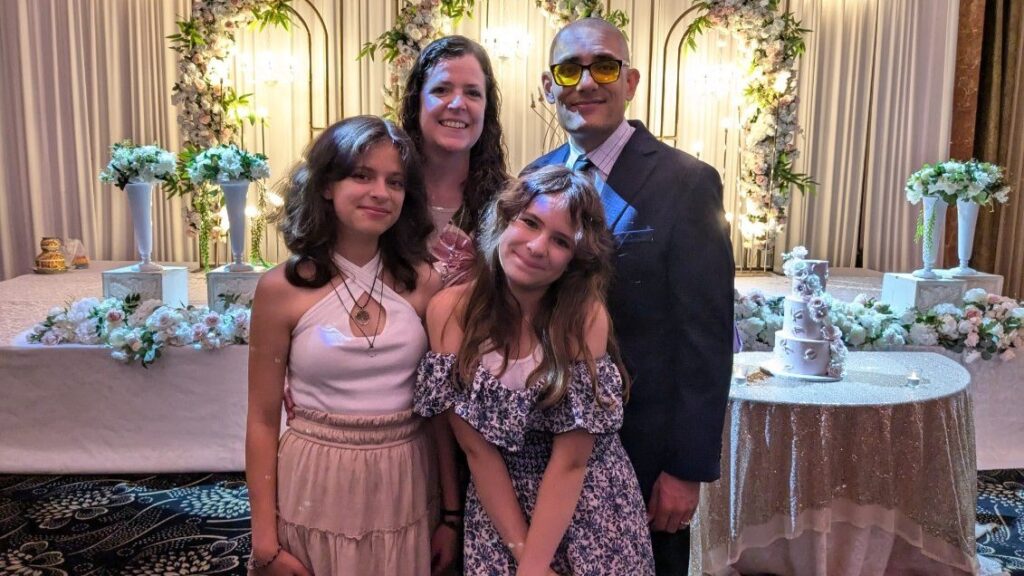
Now my girls are teenagers. AJ is driven and determined, sometimes to a fault, and I see myself in that. Victoria has this sharp sense of humor that keeps me on my toes. And I love those traits in them. But I also wonder: did they inherit my weaknesses, too? Did I leave scars I can’t see yet?
This stage is different. It requires a different version of me. I’m learning to lead by example instead of control. To give them space when my instinct is to tighten the grip. To be more forgiving of their attitudes and mistakes…because I had to learn to forgive my own first.
And here’s the part I’ve learned to accept: this work never ends. Every stage of their lives brings new challenges, and every stage forces me to ask, “What’s the next identity shift I need to make to lead my family well?”
That’s really what this journey is about. We don’t “arrive” as men. We evolve. Over and over. First it’s health. Then it’s the emotional demons we never wanted to face. Then it’s modeling something far greater than titles, money, or achievements: it’s modeling what it means to be a good man.
That’s the bar. And if we don’t set it for ourselves, someone else will set it for our kids.
So I’ll leave you with this: If your daughter chose a man exactly like you, would you be proud of that? Or would it make you nervous?
I ask myself that question all the time. And honestly? I’m still a work in progress. I’m better than I was. But I wonder sometimes if I did lasting damage to their perceptions of me, of men in general. I don’t know yet. Maybe I won’t know for years.
But I do know this: the only way forward is to keep doing the work. To keep showing up. To keep becoming the man they deserve.
Because they’re watching. And I owe them that.
Deepak